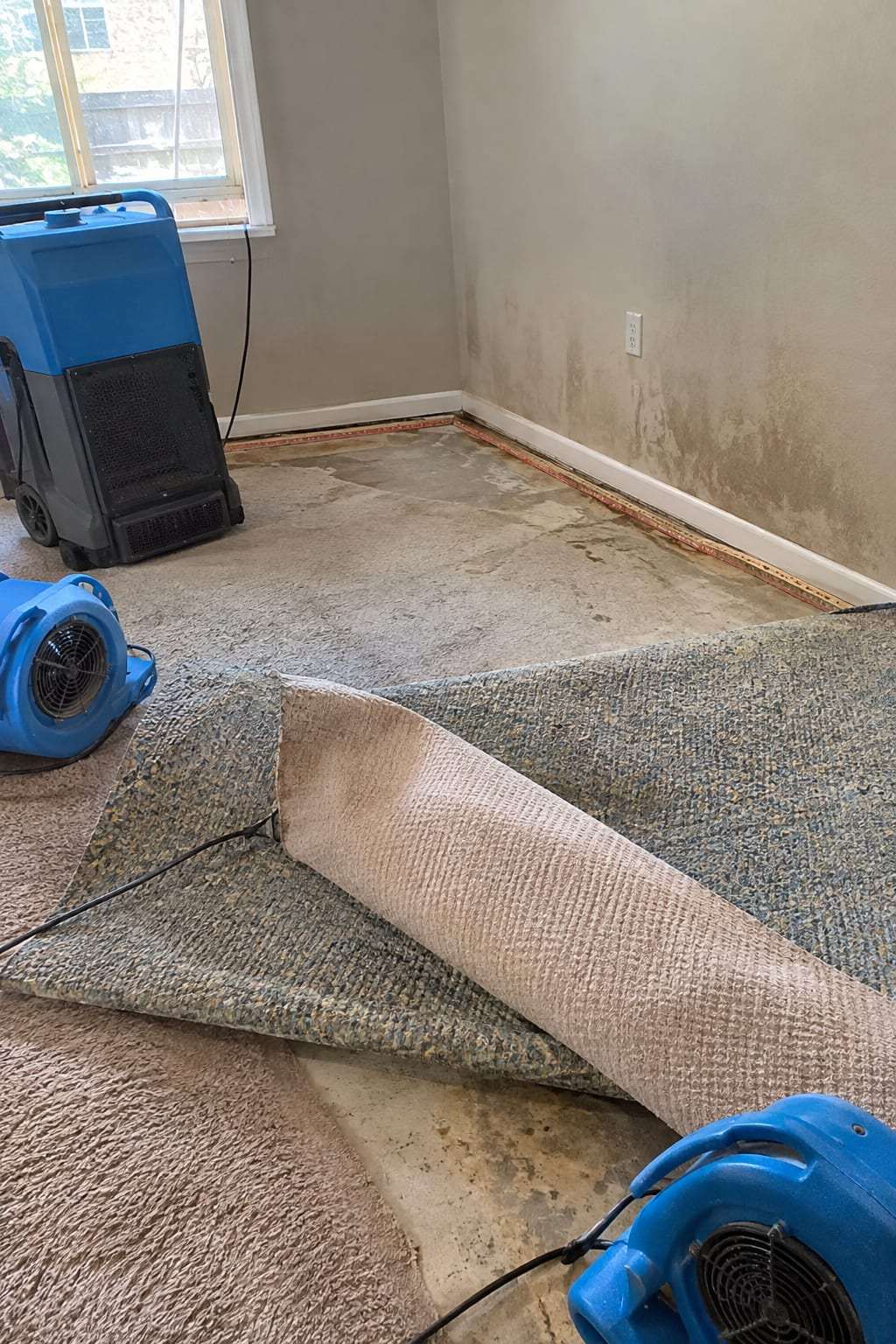
Moisture mapping
A technician reads walls, floors and ceilings with meters and a thermal camera, then marks where the water went on a floor plan. The map shows what to open up and what can dry in place.
How drying is measuredA field guide for Parker and Douglas County
What to do in the first hour, what a proper drying job looks like, and which records your insurer will ask for. Written for Parker houses, from finished basements in Stonegate to storefronts on Mainstreet.
Draft guide. No phone line or request form is connected. Contact status
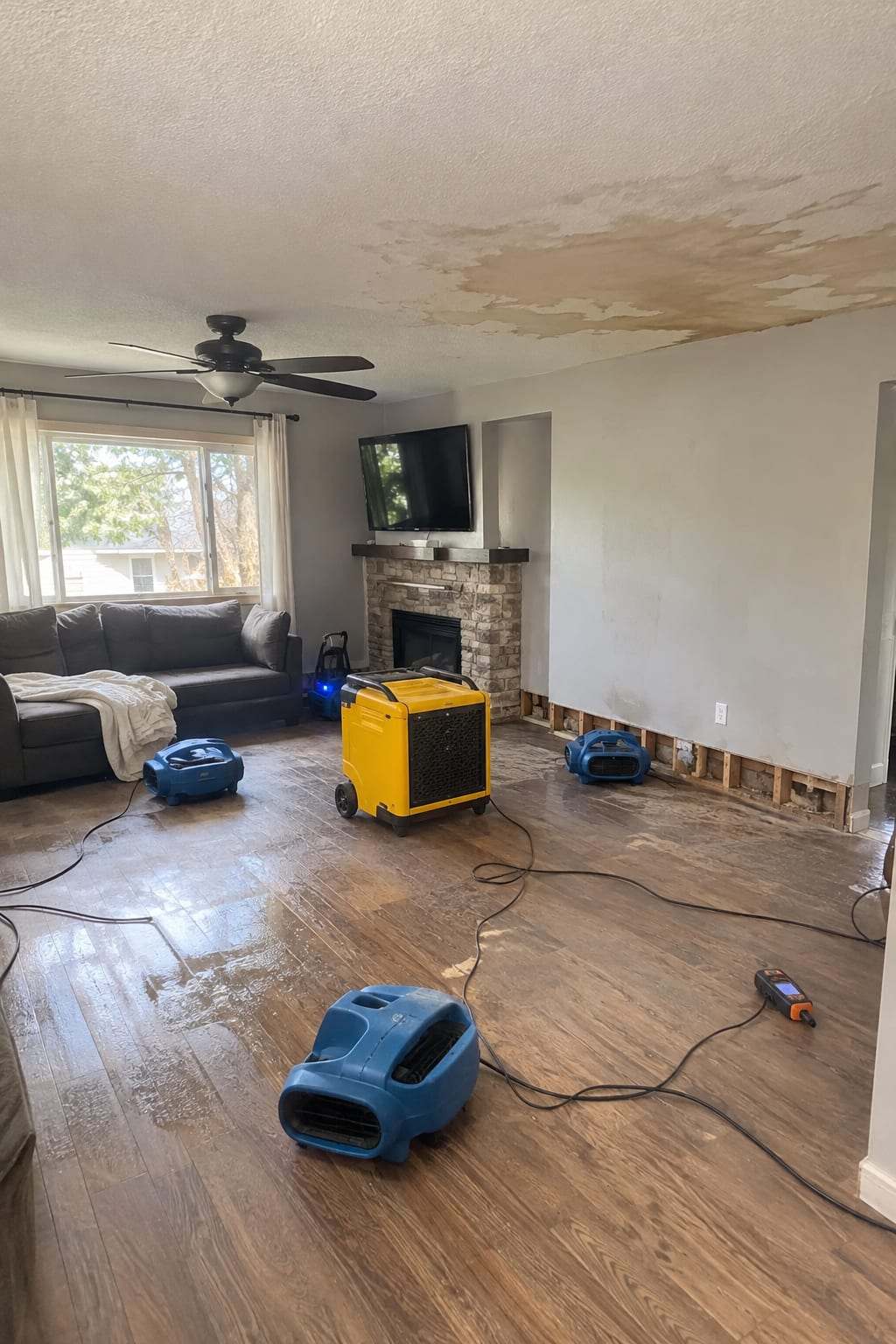
Close the main valve and stay clear of wet wiring. Call 911 if anyone is in danger, your utility if you smell gas or see sparking, and a licensed plumber or electrician for the pipe or the wiring.
Many restoration crews that work in Parker drive in from elsewhere in the metro. Ask about travel time, IICRC certification and insurance before you sign anything.
While you wait for help
Close the main water valve and confirm the flow has stopped.
Keep away from wet outlets and sagging ceilings. Call 911 if anyone is hurt or you smell gas.
Shoot every wet area before anything moves, then get furniture, rugs and boxes off the floor.
Drywall, carpet pad and framing pull water up and out. Fast extraction decides what can still be dried.
Wet materials start to swell, delaminate or grow mold, and a drying job turns into a tear-out.
Stay out of rooms with a sagging ceiling. Drain a bulge with a small hole only if you can do it without standing under it.
Clean water from a burst pipe or a failed supply line spreads fast. Within hours it wicks up drywall, slides under flooring and soaks into framing. Leave it a day or two and materials that could have dried start to swell, delaminate or grow mold. From then on, the crew is cutting out instead of drying.
A good emergency response shortens that window. The crew pulls the standing water, removes only what can't be saved and puts commercial drying equipment where the moisture sits. Ask on the first call who handles repairs, so you aren't hunting for a second contractor the day the fans leave.
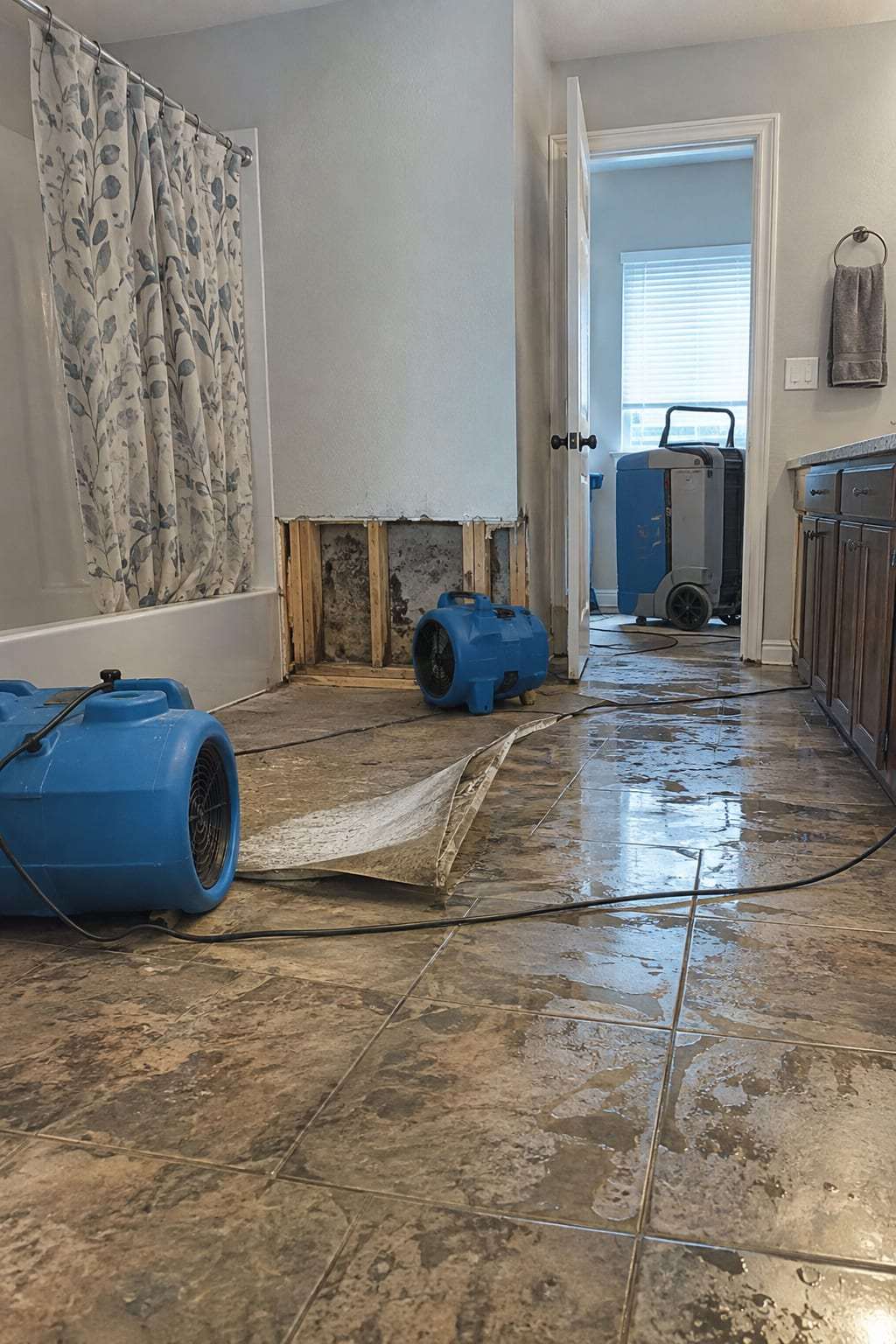
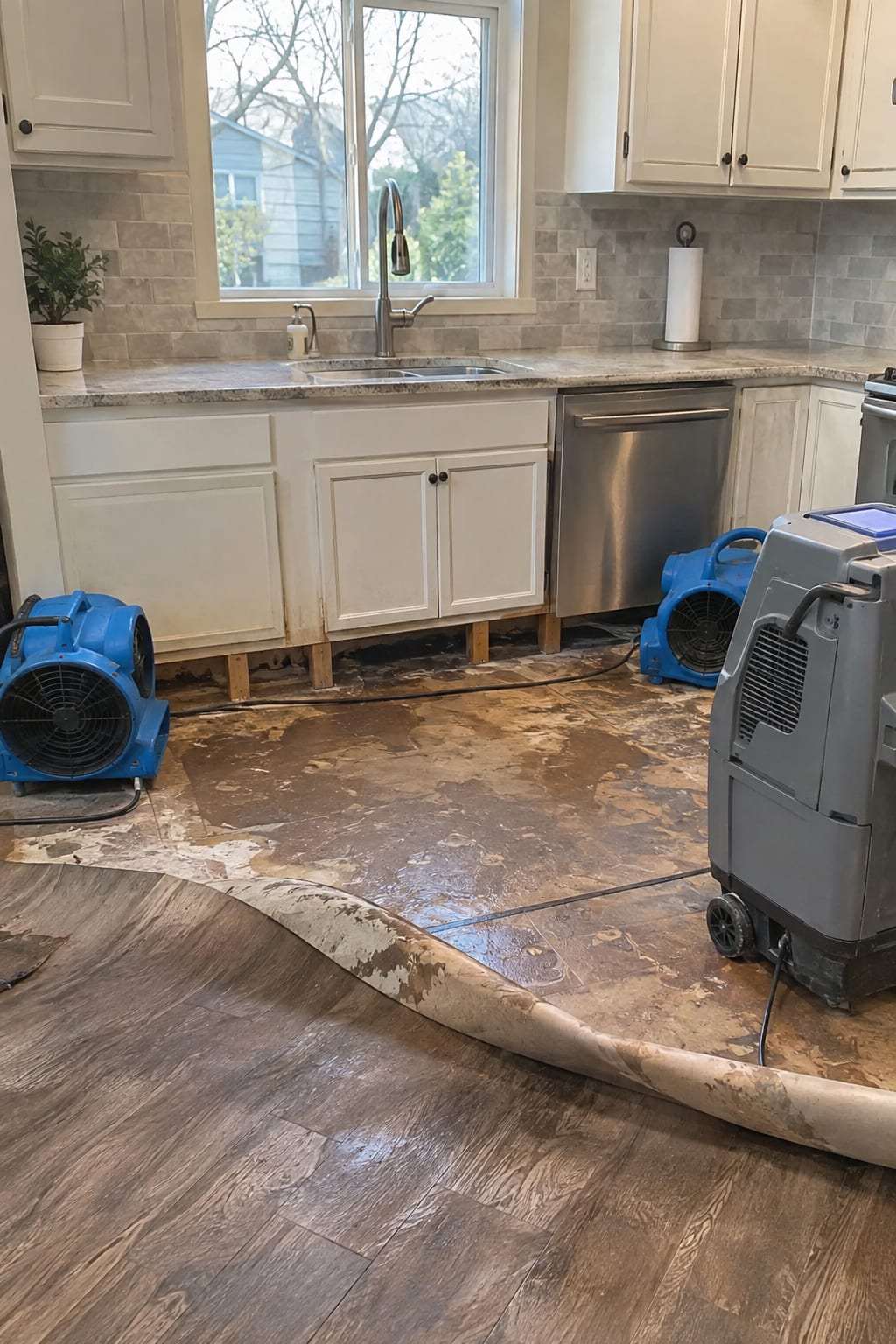
Every loss gets assessed on site, but most Parker water emergencies move through the same five stages.
Confirm the source is off, check for electrical hazards and decide whether the water is clean or contaminated.
Pull standing water with extraction equipment. Each gallon removed now is one the dehumidifiers don't have to chase for days.
Run air movers and dehumidifiers sized to the space, and open wall cavities only where moisture is trapped.
Map moisture room by room, then take readings every day and log them until materials reach their drying goals.
Replace drywall, paint, flooring and trim, with the same company or a separate contractor.
A plumber fixes the pipe. A restoration company pulls the water, dries the structure and repairs the damage. Once water reaches drywall, flooring or the basement, you usually need both, and they can often work the same day.
Expect questions about the source, how long the water has been sitting and which rooms are wet. A reputable company then tells you whether someone should come now and what to do until they arrive. Ask for a realistic arrival time, what the first visit costs and written documentation you can hand to your insurer.
Stop the water. Photograph everything. Then ask whoever you hire to show you the moisture readings.
Winter in Douglas County
Most Parker homes went up after 1990, with finished basements, irrigation systems and plumbing in garages and outside walls. A hard freeze rarely announces itself. The damage usually runs in this order.
Water in a line along an outside wall, over the garage or in an undrained backflow preventer turns to ice and splits the pipe. Nothing leaks yet.
The ice melts, pressure comes back and water runs out of the split, often inside a wall or ceiling where you can't see it.
Water follows the framing down into the finished basement, wicks up drywall and runs under flooring.
Materials that stay wet swell, delaminate or grow mold. Here a drying job becomes a tear-out.
Parker started as a railroad and ranching stop and grew into one of Douglas County's larger towns, with most of its housing built in subdivisions from the 1990s on. Many of those homes have finished basements, big irrigated lawns and sprinkler systems, and each one adds a place for water to get in. Cherry Creek runs north through town toward Denver.
The weather follows the southern metro pattern: freezing nights through much of the winter, heavy spring snow and summer thunderstorms. That calendar explains most local losses. Irrigation parts and hose bibs freeze in the cold months, and sump pumps and window wells struggle when spring turns wet.
ZIP codes served: 80134 (Parker), 80138 (Parker).
Also nearby: 80016, 80112, 80124, 80108, 80015.
Your insurance company decides what's covered. You and the restorer control the record: where the water came from, when it started and what got wet.
No restoration company can promise what a policy will pay. Ask your carrier about deductibles and coverage limits.
A technician reads walls, floors and ceilings with meters and a thermal camera, then marks where the water went on a floor plan. The map shows what to open up and what can dry in place.
How drying is measured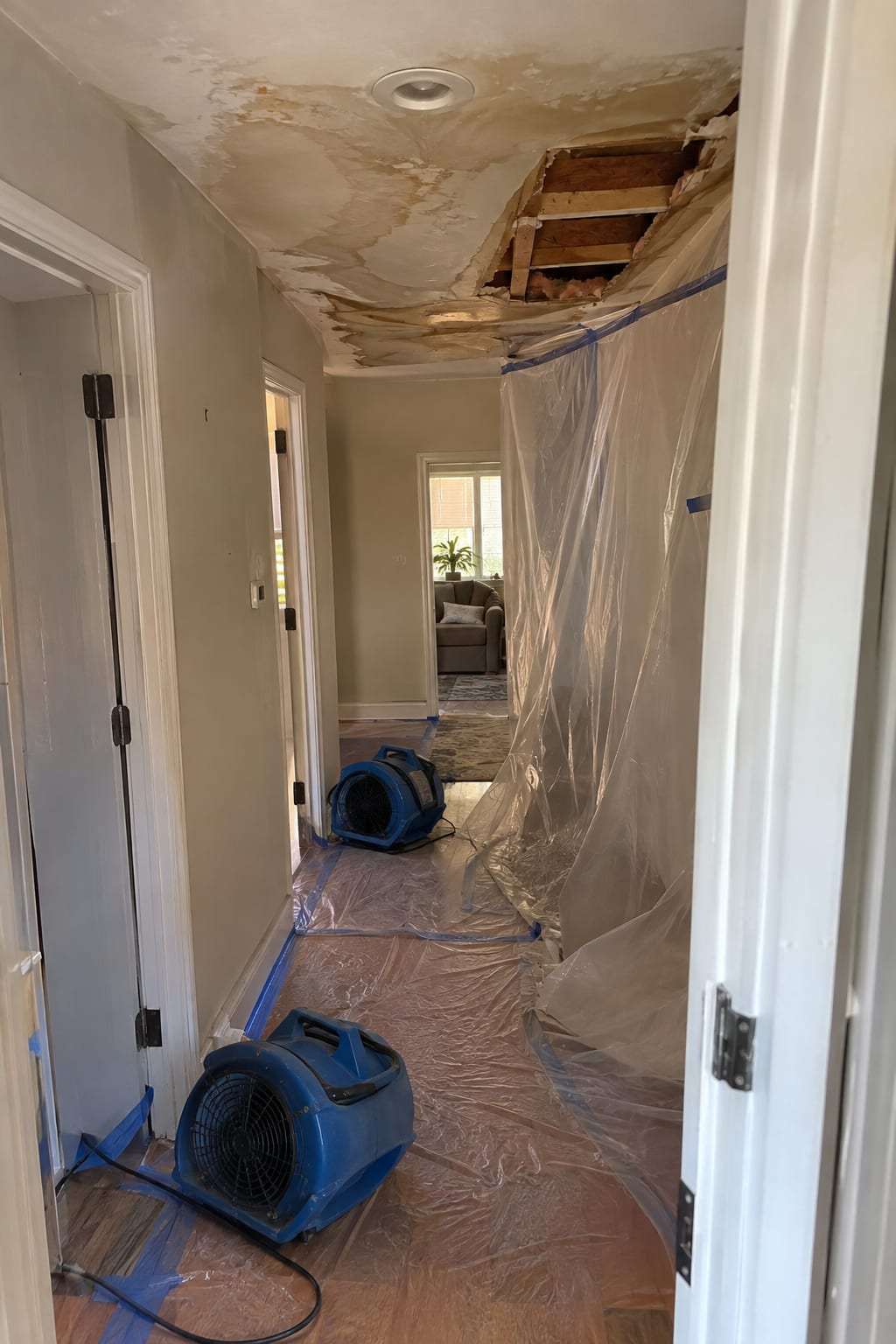
Each material gets compared with a dry reading from the same house. The assessment decides the water category, the drying plan and which materials have to come out.
Water categories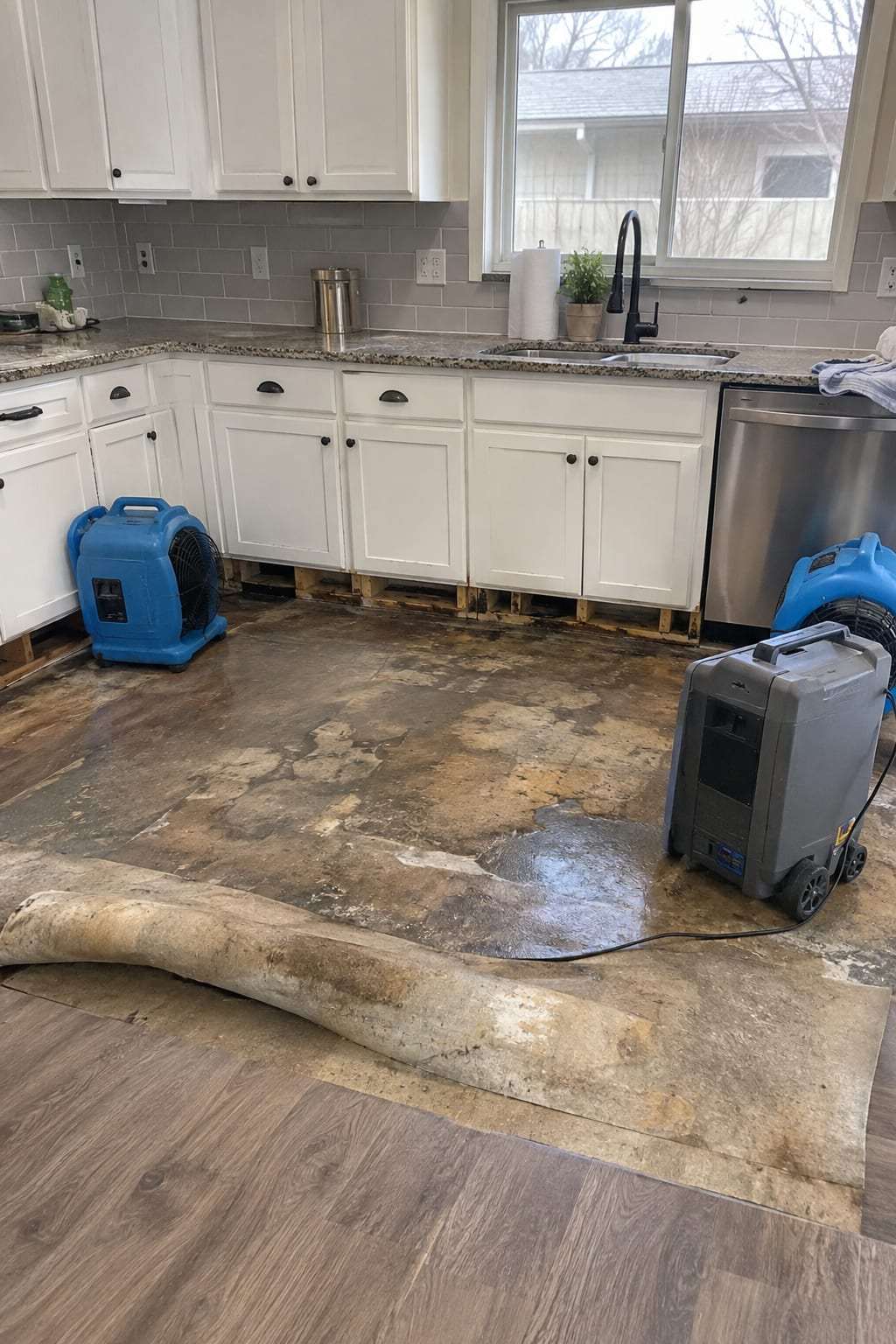
Wet hardwood cups as it swells. Drying mats pull water up through the boards, and once readings return to normal the floor can often be sanded and refinished instead of replaced.
Wet floors by typeGuides and checklists for Parker households, each focused on one problem.
Stop the source if you can do it safely, cut power to the affected area from a dry spot, lift valuables off the floor, take photos and call a restoration company. Keep out of water near outlets or appliances.
An extractor pulls out far more water, far faster, than evaporation can. Every gallon left behind has to evaporate and be caught by dehumidifiers, which adds days of drying and raises the odds of swelling and mold.
The amount of water, how long it sat, the materials involved (hardwood and plaster dry slower than drywall), temperature, humidity and how soon the equipment went in.
Yes. Photos, moisture logs and itemized estimates show an adjuster the cause and extent of the damage. Many carriers use Xactimate, so ask whether the estimate can be written in that format.
Most families stay home. The equipment is loud and some rooms may be closed off, but moving out is usually only necessary for large or contaminated losses.
Water in an office, shop or restaurant often needs bigger equipment and drying planned around business hours. Ask whether a company does commercial and large-loss work before you hire it.
Ice splits the pipe while it's frozen, but the same ice plugs the crack. Water only escapes once the line thaws and pressure returns, which is why many leaks show up a day or two after temperatures rise.
Not always. An attached hose traps water in the valve body, where it can freeze and split the valve inside the wall. The leak may stay hidden until you first open the spigot in spring.
More on cost, scope and paperwork: what to ask before hiring a restoration company.
This form is not connected. This website is a draft preview: no business has been confirmed to receive requests, so the fields below are switched off and nothing can be sent. In an emergency, call 911.
Close the main valve. Photograph everything before it moves. Call your insurer, then a restoration company you've checked. If anyone is in danger, call 911.